- GEAR
- SPARE PARTS
- Backcountry Kit
- Pro Backcountry Kit
- Binding Hardware Kit
- Pro Binding Hardware Kit
- LT Bracket
- Snap Block
- ST Bracket
- T1 Heel Rest
- Ankle Buckle
- Toe Buckle
- Ankle Ladder
- Toe Ladder
- Ankle Adjuster
- Toe Adjuster
- Vert Pucks
- Stainless Steel Pin
- Mini Puck Alignment Guide
- Puck Alignment Guide
- Spark Skin Trimmer
- BINDING TECH
- FAQs
- DEALERS
- TEAM RIDERS
- CONNECT
- ABOUT US
- CONTACT US

Dedicated to pushing innovation in splitboarding since 2006.
866.725.2085
Email: sales@sparkrandd.com
Spark R&D
P.O. Box 3284, Bozeman, MT 59772 USA
R: Aurelien Routens P: Luka Leroy
Splitboard Fitness
Split fitness tips for the beginner, intermediate, and expert splitboarder!

If you want untouched backcountry pow or plan to bag a few remote couloirs this winter you’re going to have to work for it – you have to get out and earn your turns.
Whether you’re a beginner or an expert, one important premise holds true – your fitness level and preparation should match the mission. As your splitboarding progresses so should your fitness level, technical skills, and a general understanding of backcountry travel.
It’s impossible to cover everything you need to know about split-fitness in one blog but we’ve outlined some useful information on a variety of fitness topics geared for three different groups of splitboarders – beginners, intermediates, and experts. There should be some useful information and takeaways for just about everyone. We even tapped Spark R&D’s owner, as well as the Spark Team and Guide Crew to provide helpful advice on how to improve your split-fitness.
R: Byron Bagwell and Matt Huffstetler
Beginner Splitboarders
Alright, you’re either new to splitboarding or planning to get into it this winter. That’s awesome! Don’t let it intimidate you – here are some simple ways to think about fitness and preparation to help you on your journey.
Aerobic Fitness
Early on in your splitboarding, improving your general aerobic fitness should be your main focus. Going longer and farther between breaks will greatly improve your overall experience and allow you to take on more interesting missions, even if those objectives are modest in the beginning.
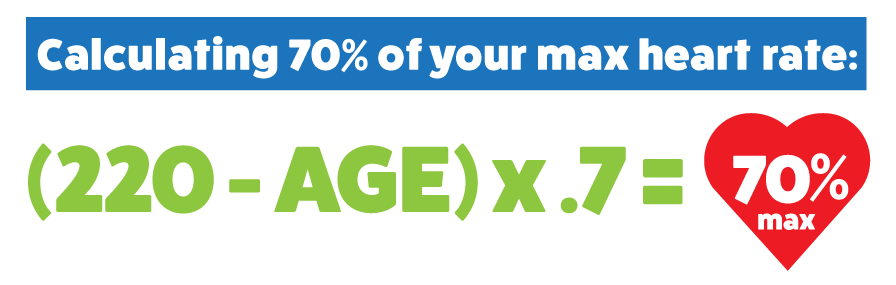
The summer is a great time to start building your aerobic foundation. An early start will give you plenty of time to build up your endurance and capacity before you hit the skin track in the winter. When you’re starting out, don’t over complicate things. If you can do a couple of activities each week that get your heart rate up for an extended period like hiking, biking, or running, you’ll be moving in the right direction. You don’t need to be redlining to do this – meaning getting your heart rate up into the 90% of capacity range (you know the feeling, when your heart is pumping so hard it kind of hurts). Finding a sweet spot in the 60% - 70% range of your max heart rate is perfect for beginner aerobic exercises. You can calculate your max heart rate by subtracting your age from 220. An easy way to get your heart rate is to take your pulse for ten seconds and multiply by six.
Strength Training
Strength training is also an important component in splitboarding. This doesn’t mean you need to become a gym rat. But, even if you’re not planning on doing any huge days this winter, it’s still nice to have your legs in split shape before the winter starts. Adding one or two 30-min strength training sessions each week will go a long way to helping you prepare for the skin track. An easy place to start for this is by doing planks, squats, lunges, and other bodyweight exercises that can be done in your living room or backyard.
Nutrition
Let’s not go overboard here – make sure you are staying hydrated pre and post-workout to get the most out of your training. Skip some of the junk and add more healthy meals this offseason and your body will reward you when you’re making that last steep push before you get to ride fresh pow in December!
What Team Rider Elena Hight says:

Ultimately, we are all getting out into the mountains to have fun, right? Having a fitness baseline before the season starts just enhances the fun to be had, so if you can look at it that way rather than training it will change your approach! As I stepped into big mountain riding from competitive snowboarding, I had to switch up my pre-winter conditioning.
: Thomas Delfino and Luca Pandolfi | P: Dan Milner
Intermediate Splitboarders
So, you’ve been around the block. You’ve summited a couple of peaks, rode a little gnar, taken some epic selfies, and maybe even been to a splitfest or two. You’re a self-identified splitboarder, heck, you might even have two splitboards now. So, where do you improve? Whether you’re looking to move up into that expert category or just become more proficient in the types of missions you’re doing, we’ve got a few tips below we think could help.
Aerobic Fitness
Sometimes you have to slow down in order to speed up. This may be one of the most challenging parts of training for backcountry fitness - the fact that you can’t get around the time component if you want to really improve your endurance and aerobic capacity. People have jobs, families, and a host of other obligations so long training sessions are not always appealing. Short intense workouts are not all bad, but you may not be building your overall endurance if that is your goal, in fact, you may be tearing it down.
The general rule of thumb for improving your aerobic fitness is that you’re spending somewhere around 80% of your training time and energy doing things that keep you around your VT1.
What is VT1?
Basically, you have a VT1 - Ventilatory Threshold. This is the point where your breathing starts to increase and lactate begins to build-up in your blood.
You can get some fancy tests to measure your current VT1, VT2, and even VO2 max levels by working with an exercise physiologist, but for the purposes of keeping it simple, we’ll use the talk test. If you can speak easily you’re below your VT1, if you’re needing to stop talking and catch your breath every few sentences you are either right at your threshold or above it.
From a simple and strictly splitboard-centric point of view, if you want to go farther and be more efficient on long tours you should not continuously crush yourself with high-intensity workouts, you need to raise your VT1 level. And that means extended exercise at or just below your threshold. It may take some time, and it may not be the more lively routines you’re used to, but it will pay dividends on the skin track. Working on your aerobic foundation by raising your VT1 is time-consuming, but it is the best way to prepare to go longer and ultimately faster in the backcountry.
Strength Training
Most people focus on their legs in preparation for snowboarding and splitboarding. They’re not wrong to do so, leg strength is extremely important to touring and riding. But, one area of strength training that sometimes gets left behind is core work.
Core strength is extremely relevant to touring and riding. As the center of your body, the core functions to stabilize the trunk while the arms and legs are moving. A strong core helps us in a couple of key ways:
- Core strength spares the spine from excessive strain and load. As splitboarders, we’re trying to keep our packs at a reasonable weight, but we still have to carry quite a bit of gear around all day. Strengthening the core will improve your overall back health and help prevent injuries by keeping you nice and stable.
- Core strength also helps us transfer force back and forth from our lower to upper body. The more efficiently we can do this, the more in control we are, and the more energy we conserve. Reaching the top with more energy means a stronger more controlled descent, plus more energy for a second lap!
There are a lot of ways to improve your core strength beyond doing sit-ups. Plank variations, surfing, or a regular yoga practice can go a long way to having a stronger and more stable core.
What Guide Crew member Neil McNab says:
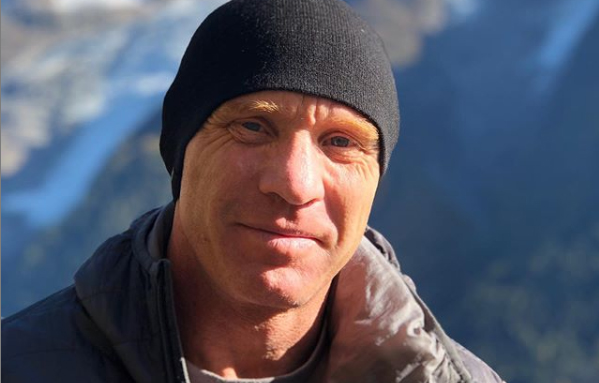
Staying active in your downtime is key to good body and core maintenance. Try to find activities that you can be passionate about, I surf most days and combine that with daily yoga practice. I also boulder and barefoot run a couple of times a week as I’m not really psyched on specific indoor gym workouts so much these days.
R: Aurelien Routens | P: Luka Leroy
Expert Splitboarders
If you’re still reading, your split game is likely pretty legit. You are competent at planning big days and can truly crush some vert. So where do the improvements come from? Below we list a couple of topics for you to consider. At this level, it may be time to think about a little more data-driven approach to your training and splitboarding.
Data + Coaching
Alright, this is going to be a continuation of the intermediate section. If you didn’t read that because you’re a badass and not an intermediate, maybe give it a quick glance. If you have a solid aerobic base and are wondering what the next steps are, here are a couple of helpful ideas.
- Get the actual data. You’ll need a heart rate monitor and you’ll want to visit an exercise physiologist who can test your VT1 and VT2 levels. To progress to the next level, you need more than an understanding that exercise below your VT1 is crucial. You need the data to tell you where you are and to show your improvements. That’s how to chart a course for improved fitness.
- Get a coach or consult with a professional. No matter how good of shape you’re in and how much you know about fitness, there are folks out there who specialize in this endurance field. Tap their knowledge and use them to talk about what you’re doing and what your goals are. You don’t have to be meeting weekly if it's not feasible; monthly or even quarterly consultations can be all you need to get on track.
Do these couple of actions come at an expense? Sure. But, so does all your gear. If you can invest in your gear you can invest in your training. Getting the data and understanding where your body is at scientifically is a great way to take your training and splitboarding to the next level.
Strength Training
We asked our friend Sean Sewell from Colorado Personal Fitness to give us a couple of ideas for exercises that would benefit the more advanced splitboarder. With so much emphasis on the uphill, we asked him to recommend some exercises that would help on the descent. In his short video, Sean focuses on improving power and explosiveness, muscular endurance, joint integrity, and hitting small muscle groups like the hip flexors.
Hydration + Nutrition
Hydration is a bit of common sense, but you’d be surprised how often it gets overlooked. Yes, we mentioned hydration in the beginner section, so what’s it doing in the expert arena? Well, to be honest, the experts are often overlooking this important aspect of training and splitboarding and not getting the performance out of their body that they could be. Dehydration may not significantly impact you while you’re working out but it likely will slow you down on day two and even more so on day three. This comes into play with training as much as it does on split missions. Most advanced splitboarders and backcountry athletes will have a training regimen and making sure you maximize your workouts is extremely important. Will Ritter, the owner and chief designer at Spark R&D, crushes 300 to 400 ml per hour on a typical winter mission when it’s cold and doubles that for aerobic exercise in the summer.
Another easy way to improve your touring and training is to add an electrolyte mix to your water. Propel, Nuun, Gu tablets, and endurolytes by Hammer Nutrition are all good options.
Have you ever gotten in the cycle of not eating much while either working out or on a tour and then crushing a big meal when you get home? Did you feel a bit banged up the next day? How about day three? It’s not an uncommon routine, and it is also not ideal for training or for multi-day missions. You’re simply stressing your body and muscles unnecessarily. Just because this is the expert section, it doesn't mean the advice has to be complicated - try eating while you're training and out touring. This can mean carrying some extra high-calorie bars or easily digestible gummies like Cliff Blocks with you to munch while you’re on a flat section. Another, albeit slightly more committing step is to rock the Will Ritter special - a water bottle with a 50/50 calorie mix of Sustained Energy by Hammer Nutrition and maple syrup with a little salt to taste! Your jaws can get a little worked chewing cold bars all day, but when you drink your calories, you can keep on cruising. Skeptical? Try to keep up with Will on the skin track next time you see him at the Silverton Splitfest :)
What Spark R&D owner and design director Will Ritter says:

Not only do I love splitboarding, but just being out on our gear as much as possible is incredibly important to my design process. With a business to run and a couple of small kids, it is important to make the most of my days in the backcountry.
There you have it - nuggets of Split Fitness advice for just about every type of splitboarder. There is no silver bullet for splitboard training that will perfectly prepare you for every mission. Dialing in a proper training program requires some critical thinking about your current fitness level, as well as an examination of your goals for the upcoming winter. Addressing some of the topics above doesn’t mean you’re immediately going to crush thousands of more feet of vert every tour or never get tired, but it’s a good place to start if you want to get your body in better shape. Remember, the training should match the mission. If you're planning light days all winter, your training can likely be on the more chill end. If you've got lofty objectives in mind, a more intense program is probably warranted. Lastly, make sure you're doing some type of recovery activity after working out. Proper stretching and/or foam rolling are both easy and will help make sure your body stays in good working order as you prepare for the splitboard season.
Happy Splitting!
More Information from the topics covered:
Ventilatory Threshold - https://www.infofit.ca/ventilatory-threshold-improve-performance/
Bodyweight exercise ideas - https://www.nerdfitness.com/blog/the-42-best-bodyweight-exercises-the-ultimate-guide-for-working-out-anywhere/
Core - https://www.health.harvard.edu/blog/understanding-and-improving-core-strength-2018090414662
Training for the Uphill Athlete - https://www.amazon.com/Training-Uphill-Athlete-Mountain-Mountaineers/dp/1938340841
Active Recovery - https://www.sparkrandd.com/2016/10/19/split-fitness-part-3-active-recovery/
Active Recovery Meal Ideas - https://www.verywellfit.com/the-best-foods-to-eat-after-a-workout-3121369